
Sheikh Hasina's four-decade political journey ends with a death sentence
Staff Reporter , Published: November 17, 2025, 5:41 am
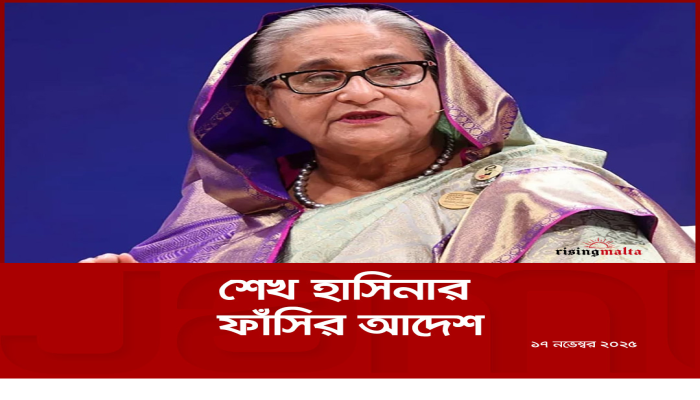
Sheikh Hasina — Four Decades of Political Dominance, Ending With a Death Sentence
Bangladesh’s former prime minister and one of the most influential political figures of the past four decades, Sheikh Hasina, saw her long political journey reach a dramatic end with a death sentence handed down by a special tribunal. The court ruled that she was responsible for crimes against humanity during the July 2024 crackdown on nationwide protests.
Once considered the most powerful leader in the country, Hasina was viewed by some as authoritarian and by others as the chief architect of Bangladesh’s development. Until her ouster on 5 August 2024, amid massive student-led protests, her political authority remained firm and far-reaching.
Early Years and Rise to Power
Hasina’s political story began after the tragic 15 August 1975 assassination of her father, Bangabandhu Sheikh Mujibur Rahman. Following nearly six years in exile, she returned to Bangladesh, taking charge of the weakened Awami League and becoming party president in 1981. Her influence gradually grew as she rebuilt the party and earned grassroots popularity.
From Protest Leader to Prime Minister
Hasina emerged as a prominent figure in the anti-Ershad movement of the late 1980s. Although the Awami League lost the 1991 election, she secured victory in June 1996, becoming prime minister for the first time.
Her return to power in 2008 with a landslide victory — gaining more than 200 seats — transformed the Awami League into an overwhelming political force. Constitutional amendments and institutional centralization strengthened her long-term governance.
Three Consecutive Terms: 2014, 2018, 2024
Hasina retained power through the 2014, 2018, and 2024 elections, each marred by controversy — including uncontested wins, alleged irregularities, and tightly controlled party rivalries. These developments reinforced claims of an increasingly authoritarian rule.
The Quota Movement and Public Outrage
In 2024, long-standing frustrations among youth erupted through the quota reform movement. What began as a student protest escalated into a national showdown against inequality and state repression. Continuous gunfire by security forces left hundreds dead, intensifying public anger.
Fall from Power and Escape to India
As protesters marched toward the prime minister’s residence on 5 August, Hasina fled the country and took refuge in India. Under the interim government led by Professor Muhammad Yunus, trials began for the July killings. Multiple cases placed Hasina at the center of the allegations, marking a dramatic reversal for the long-time leader.
A Historic Turning Point
Many authoritarian rulers throughout history have faced imprisonment or execution after losing power. Sheikh Hasina now finds herself in a similar situation. Currently in New Delhi, her future remains uncertain as questions persist over whether India will return her to Bangladesh. With the tribunal considering involving Interpol, the next steps will determine the final chapter of her political legacy.