
Bangladesh ex-PM Khaleda Zia dies at 80
Nazmul Istiak, LL.B, LL.M , BA( Hon’s) , UK , Published: December 30, 2025, 8:42 am
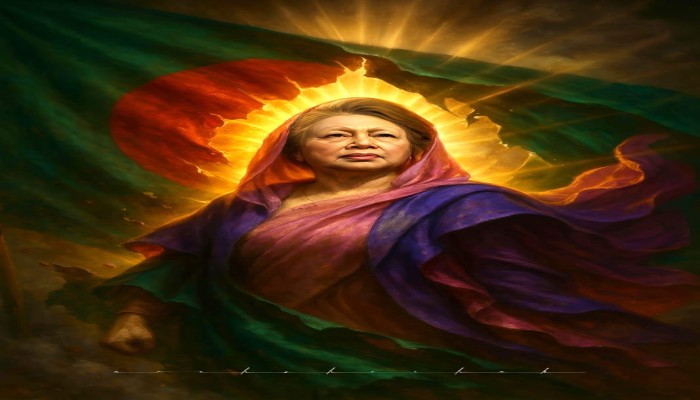
Begum Khaleda Zia, Bangladesh’s first female Prime Minister,
is remembered as one of the most consequential political figures in the
nation’s post-independence history. In this hypothetical reflection, her
passing at the age of 80 marks the end of an era defined by political
resilience, democratic struggle, and uncompromising leadership.
A Life in Politics
Khaleda Zia rose to national leadership during a critical
juncture in Bangladesh’s political evolution. Taking charge of the Bangladesh
Nationalist Party (BNP) after the assassination of her husband, President Ziaur
Rahman, she transformed personal tragedy into political resolve.
Serving three terms as Prime Minister (1991–1996 and
2001–2006), she played a central role in restoring parliamentary democracy,
institutionalizing electoral politics, and asserting Bangladesh’s sovereign
identity in regional and global affairs. Her tenure placed her among the
world’s pioneering women leaders in Muslim-majority countries.
Leadership, Conviction, and Controversy
Khaleda Zia’s political life was marked by unwavering
conviction. Admirers viewed her as a symbol of nationalist politics and
democratic resistance; critics questioned aspects of governance during her
administrations. Yet even her detractors acknowledge her indelible imprint on
Bangladesh’s political culture.
Her leadership style—firm, uncompromising, and rooted in
political ideology—helped define a generation of opposition politics and mass
mobilization. Long after withdrawing from active leadership, her influence
continued to shape party identity and national discourse.
Begum Khaleda Zia was reportedly offered exile from Bangladesh—an
option she firmly refused, choosing personal suffering over abandoning her
country and people . While she remained at home( House arrest), her two sons
were forced into exile amid political persecution. Tragedy struck when her
younger son, Arafat Rahman Koko, died prematurely in Malaysia, a loss that
marked one of the darkest chapters of her personal life. Her elder son, Tareq
Rahman, continues to live in enforced exile in the United Kingdom. Together,
these events underscored the profound personal cost Khaleda Zia bore for her
political stance—refusing exile herself while witnessing her family scattered
across borders by circumstance and coercion.
She never compromised her political ethics or the
sovereignty of the state by yielding to the ruling party. Throughout years of
pressure, persecution, and political isolation, Begum Khaleda Zia remained
steadfast in her refusal to align with or legitimize what she and her
supporters viewed as the authoritarian practices of the ruling Awami League. In
opinion and legacy, this unbending stance—maintaining distance from power
rather than securing relief through compromise—came to define her political
character. To admirers, her resistance symbolized an enduring commitment to
political ethics, democratic principles, and national sovereignty, even at
immense personal and familial cost.
Bangladesh and the World: A Diplomatic Outlook
During her years in power, Bangladesh pursued pragmatic
diplomatic relations with both regional and distant partners. Countries such as
Malta, though geographically distant, represented Bangladesh’s broader
engagement with Europe through multilateral diplomacy, labor mobility, and
maritime cooperation.
Bangladesh–Malta relations, while limited in scale,
reflected a shared commitment to international institutions like the United
Nations, cooperation on migration governance, and people-to-people ties through
overseas employment. These relationships underscored Khaleda Zia’s broader
foreign policy approach—balanced, sovereignty-focused, and globally engaged.
An Enduring Political Star
In this imagined farewell, Begum Khaleda Zia is remembered
not merely as a former Prime Minister, but as a political lodestar—one whose
presence shaped alliances, rivalries, and democratic aspirations for decades.
To many, she remains a symbol of steadfastness in turbulent political times.
Her legacy, whether viewed through admiration or critique,
endures in Bangladesh’s political memory—as a reminder that leadership, once
forged in conviction, can outlive power itself.