Yumnam Khemchand Singh sworn in as Manipur CM.
Manipur gets a new CM after a year of federal rule.
Staff Reporter ||
Published: February 17, 2026, 3:32 am
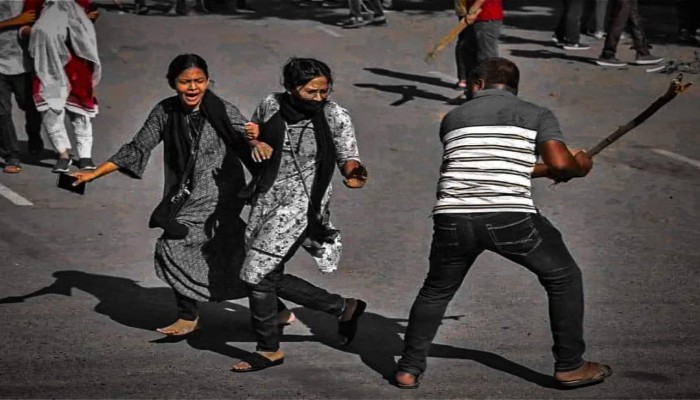
 Protesters in Imphal demand a resolution to the conflict.
Manipur, in India's northeast, has a new chief minister after being under direct federal rule, which was imposed a year ago, following ethnic violence that left more than 260 people dead.
Yumnam Khemchand Singh, a fifth-dan black belt in Korean martial art taekwondo, took oath last week, inheriting a state still scarred by clashes between the majority Meitei and the minority Kuki-Zo communities. Since the 2023 violence, the communities have been largely segregated, confined to separate regions, with thousands displaced from their homes.
Singh has a long association with taekwondo and has taught the martial art for years. But he is also a seasoned politician. Despite long ties to the Rashtriya Swayamsevak Sangh (RSS), India's governing Bharatiya Janata Party's (BJP's) ideological parent, the 62-year-old was a late entrant to electoral politics. Singh, who belongs to the BJP, was first elected in 2017 and has since served as assembly speaker and a state minister overseeing portfolios including education and rural development.
Now, as he takes charge of a troubled state, the question is whether he can help bring peace. Opinion remains divided. While some Manipur residents and analysts told the BBC they see hope in his leadership, others remain sceptical. "It is difficult to say anything right now, and the next few weeks will be crucial in giving a clearer picture," Pradip Phanjoubam of the Imphal Review of Arts and Politics magazine, told the BBC.
Even as Singh takes office, tensions in Manipur continue to simmer. On 21 January, a man from the Meitei community was killed in a Kuki-Zo-dominated area where he had been living with his wife, who is from the Kuki-Zo community. This was the latest in a series of killings linked to the conflict. Hours after Singh took oath on 4 February, protests broke out in the state's Churachandpur district, with roads blocked and markets and offices shut.
Kuki-Zo civil society groups and student organisations condemned the participation of some Kuki-Zo legislators in the formation of the new government, calling it a "betrayal" and reiterating their demand for a separate administrative arrangement for Kuki-Zo-dominated areas. While the valley areas in Manipur, including its capital, Imphal, are largely inhabited by the Meiteis, Kuki-Zos predominantly live in the surrounding hills.
Even as tensions between Meitei and Kuki-Zo communities persist, new frictions have emerged between Kuki-Zo and Naga tribal groups, adding another layer of complexity to Manipur's unrest. Tensions were reported on Sunday in the state's Ukhrul district, where authorities have imposed restrictions on gatherings following an alleged assault involving villagers from the two communities.
Singh belongs to the Meitei community. And three ministers in his cabinet, including one deputy chief minister, are from the Kuki-Zo community - a composition that reflects an effort by the BJP to balance ethnic representation in a deeply divided state. But some in the Kuki-Zo community are not convinced.
Glady Vaiphei Hunjan, an adviser to the Kuki-Zo Women's Forum in Delhi, says peace could not be "imposed by maintaining the status quo." "Leadership that can bring peace must demonstrate moral clarity - by acknowledging where the state has failed, engaging all stakeholders equally and committing to a political solution rather than administrative management of a conflict," she says.
Despite decades of unrest, Manipur has built a reputation as one of India's most consistent producers of elite athletes. This is often attributed to a strong local sporting culture—a tradition Singh himself was part of. Sunzu Bachapatiyum, a filmmaker who belongs to the Meitei community, says he is optimistic about Singh's leadership. "The fact that he could gather sufficient legislative support to form a government suggests a degree of acceptability. In the current climate, that is at least a step forward."
The return of an elected government creates space for political engagement, but deep mistrust between communities remains a hurdle. "Peace will depend on whether that authority is used to rebuild trust across communities rather than simply restoring administrative normalcy," says Phanjoubam.
Share it




























By commenting you are accepting our Comment Policy.